Easy Sautéed Cabbage

on Jan 25, 2026, Updated Sep 29, 2026
This post may contain affiliate links. Please read our disclosure policy.
Add as a preferred source on Google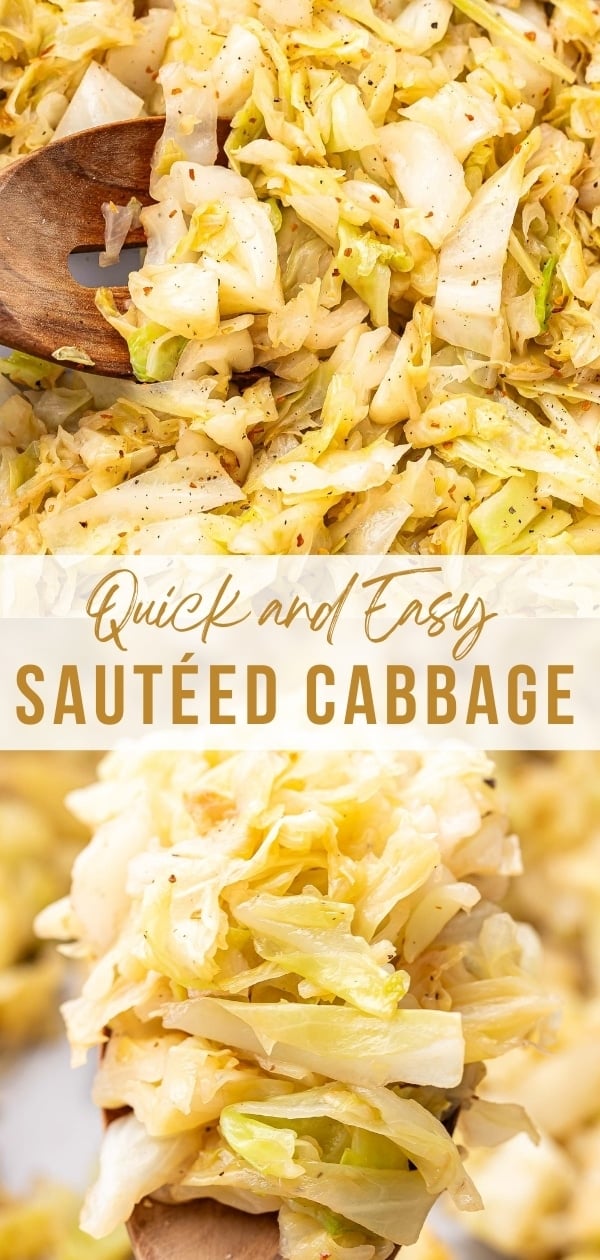
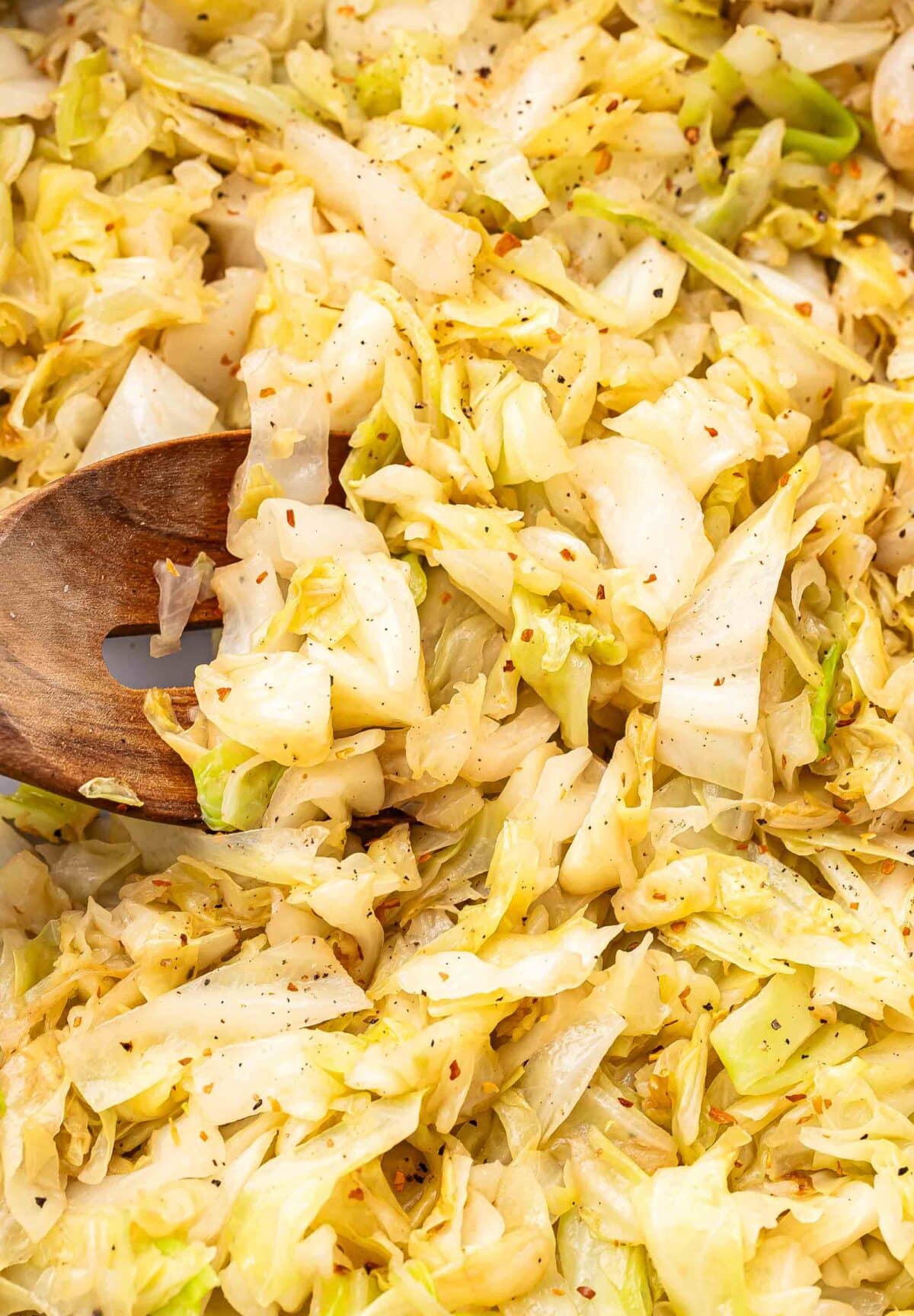
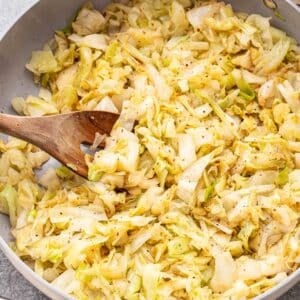
This easy sautéed cabbage is a simple skillet side dish made with green cabbage, butter, garlic, balsamic vinegar, and a pinch of red pepper flakes, and it’s ready in just 15 minutes! It’s savory with a hint of sweetness and pairs perfectly with any protein. It’s low in calories and an easy way to add more vegetables to any meal.
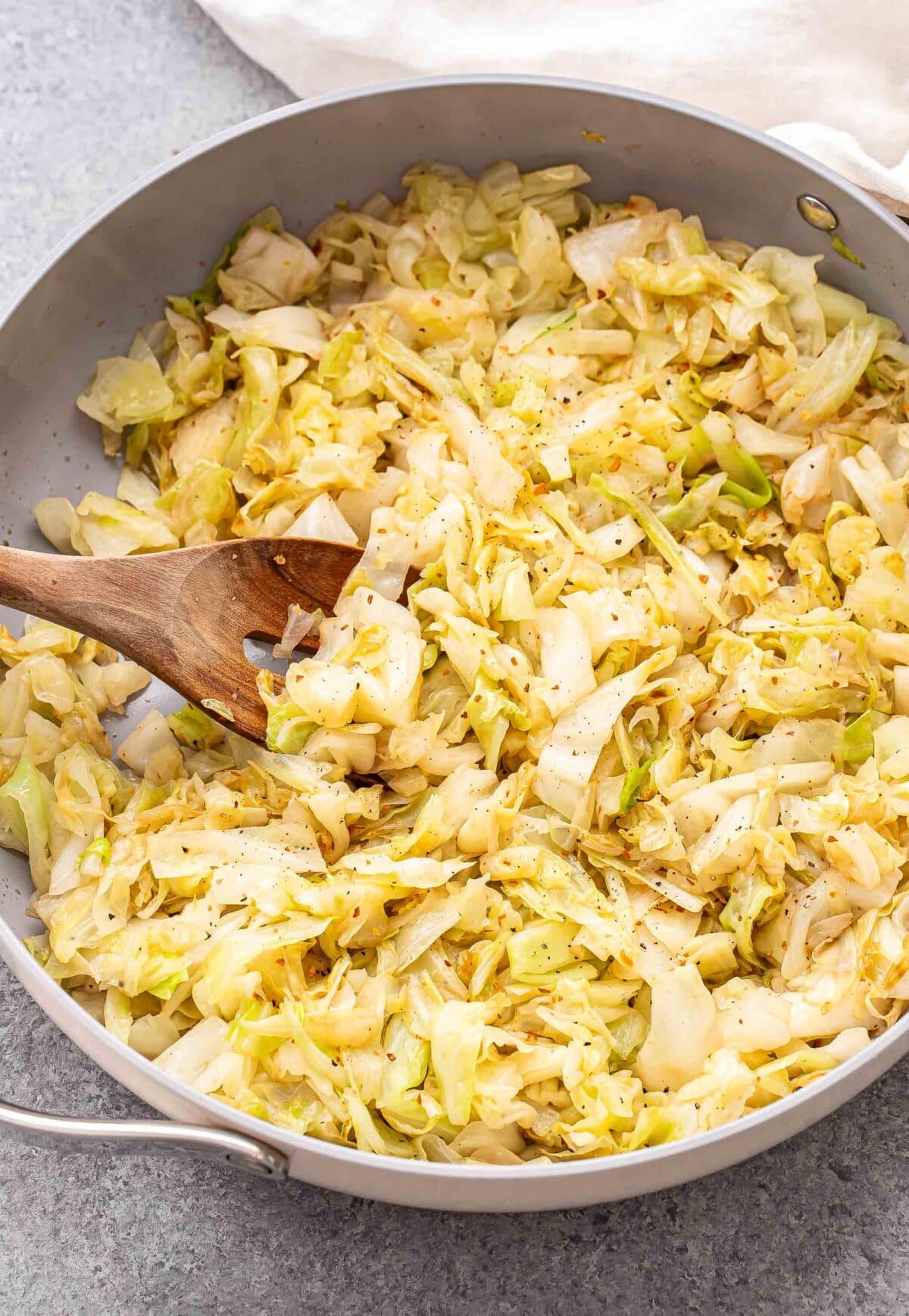
Sautéed cabbage might not look impressive, but what it lacks in presentation it makes up for in flavor. I prefer cooking cabbage, whether sautéing or roasting it in the oven, versus eating it raw. It’s sweeter, less bitter, and has a softer texture. Cooked cabbage is also easier for your body to digest.
I love this cabbage recipe because it only uses 5 simple ingredients, most of which are pantry staples that you likely already have on hand. I like to cook the cabbage in a combination of olive oil and butter. Olive oil is a good source of healthy fats and promotes browning while cooking the cabbage. Butter adds a wonderful, rich flavor!
The secret ingredient that makes this recipe truly special is balsamic vinegar. Cabbage loves acid, and a splash of vinegar brightens all the flavors and brings the dish to life. Add the vinegar off the heat so the flavor stays bright.
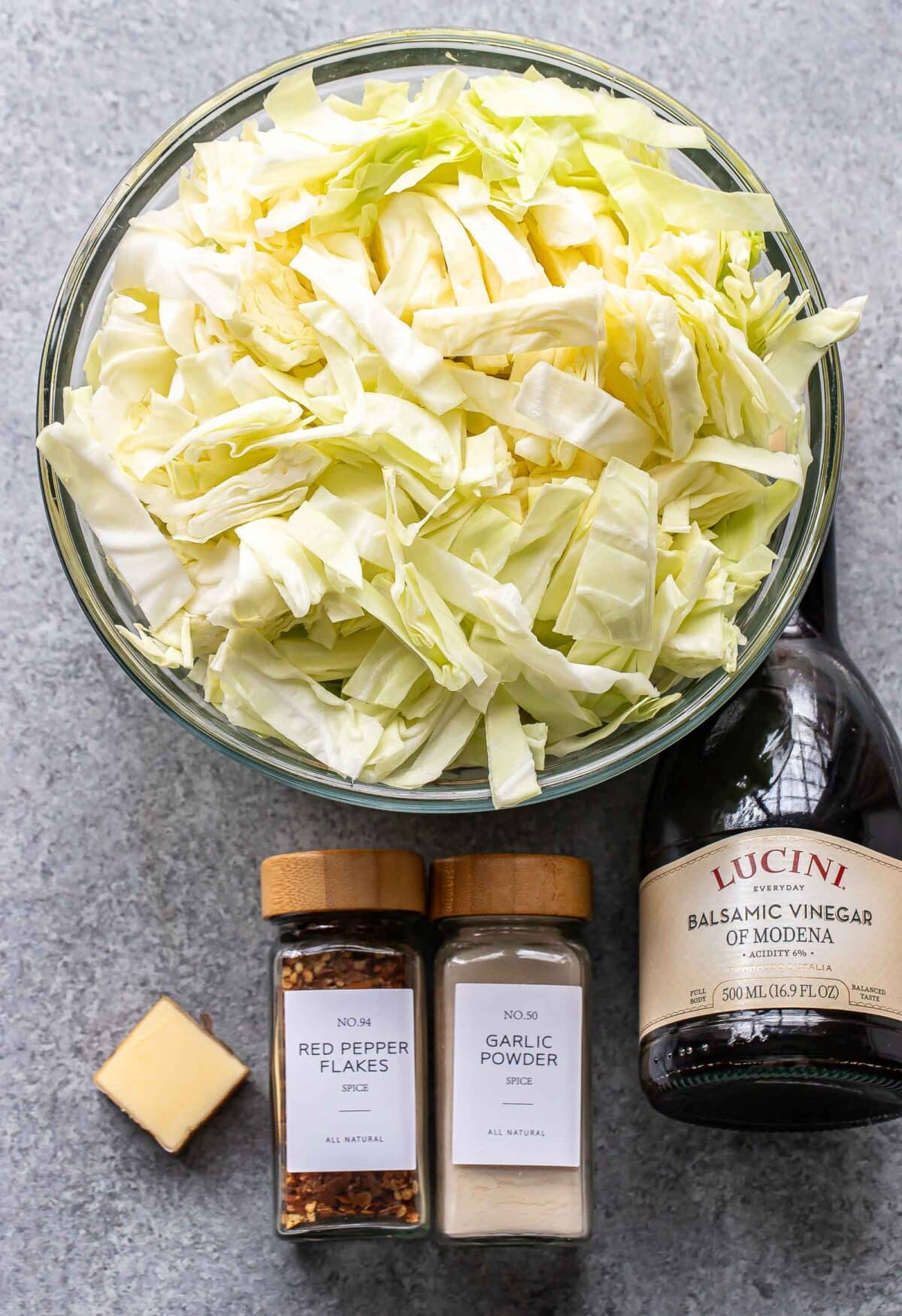
Below are the the ingredients used to make sauteed cabbage, plus some helpful notes and tips to make this an easy and successful recipe for you! The full list of ingredients and measurements are in the recipe card.
Cabbage – Pick out a small cabbage, approximately 2 – 2.5 pounds. This is the perfect size for 4-6 people. Green cabbage is what I used for this recipe. It has a mild flavor and soft texture. You can use red cabbage using the same ingredients, just be aware that the flavor is more robust and the texture is firmer.
Butter and Olive oil – Olive oil can withstand higher cooking temperatures, but butter adds wonderful flavor to the cabbage. That’s why I use both! However, you can use one or the other. To make the recipe dairy-free and vegan replace the tablespoon of butter with additional olive oil.
Garlic powder, red pepper flakes – An easy way to add savory flavor and a hint of spicy heat to the cabbage. The red pepper flakes are optional, but if you love a kick of heat, I definitely recommend adding them in. You can also use fresh garlic if you prefer, but be careful not to burn it or it will give the cabbage a bitter flavor.
Salt and pepper – Cabbage needs salt. Kosher salt is best because it has a more pleasant flavor than table salt. Season and taste as you cook and add additional salt and pepper as needed.
Balsamic vinegar – The secret ingredient! The acid in the vinegar gives the sautéed cabbage a pop of flavor that you don’t get without it. Balsamic vinegar specifically also adds a hint of sweetness. You can substitute with apple cider vinegar.
Tips for Making Sautéed Cabbage
I’ve gathered a few of my top tips that will help the cabbage cook evenly, brown better, and keep the balsamic flavor bright at the end.
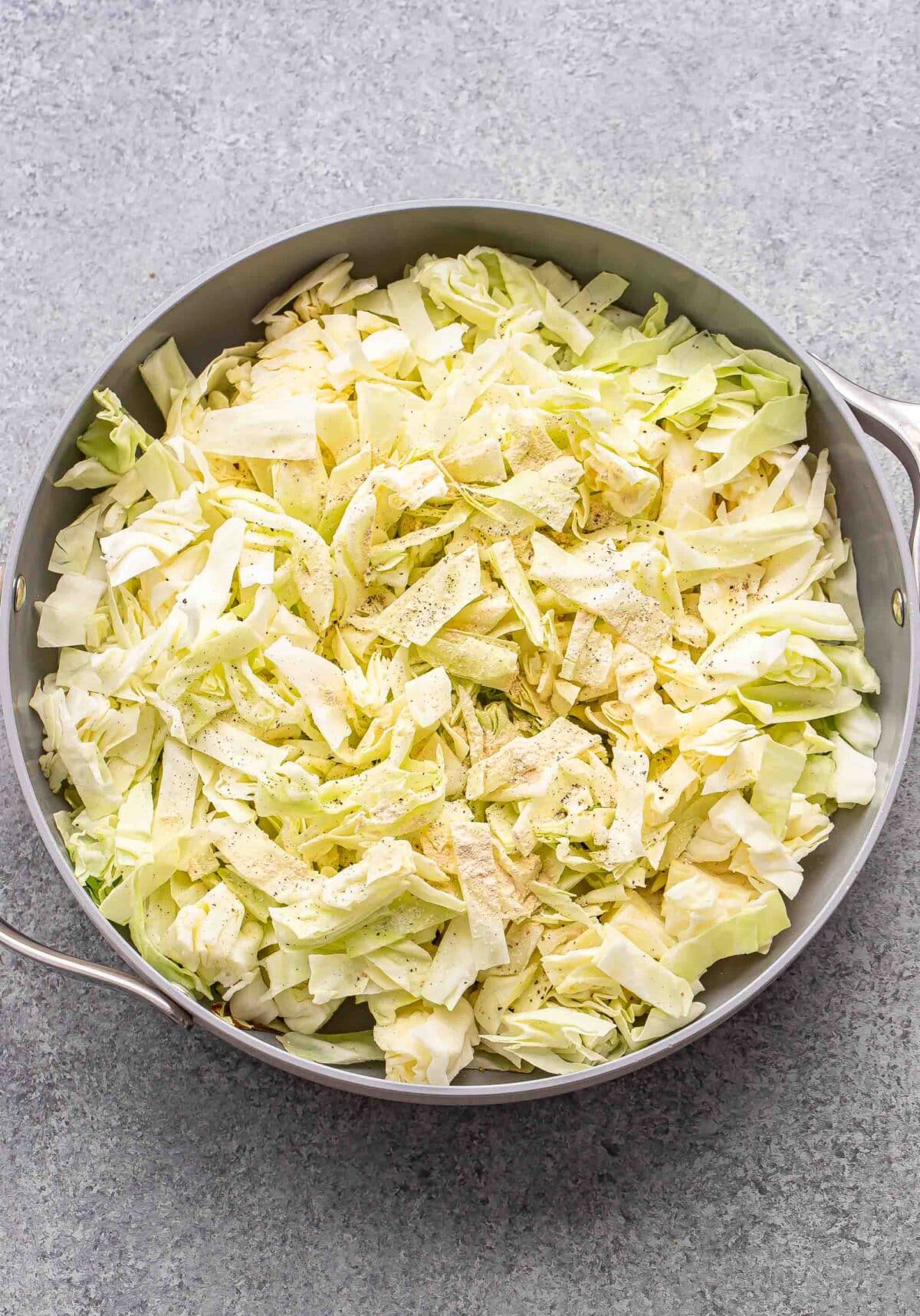
- Cut the head of cabbage in half and then cut out the tough core. Cut the halves again so that you have 4 chunks. This makes it easier for slicing. Slice the cabbage into thin strips so it cooks quickly.
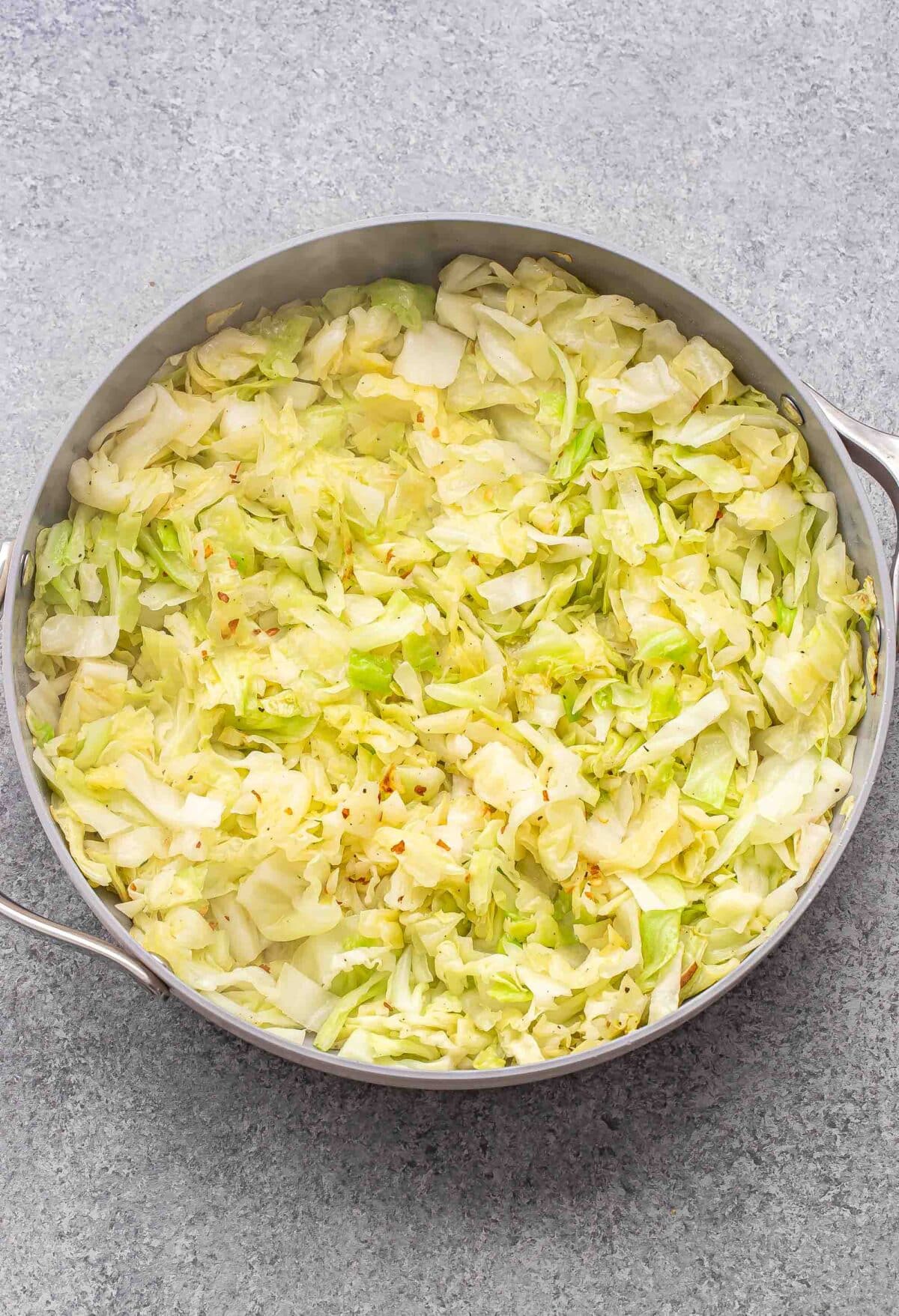
- Use a large deep 12 inche skillet. When you add in the cabbage it’s going to look like it will barely fit, but it will cook down quickly, similar to how baby spinach does. If your skillet is too small, cook the cabbage in batches.
- I recommend using tongs to toss the cabbage. It’s easier and less messy.
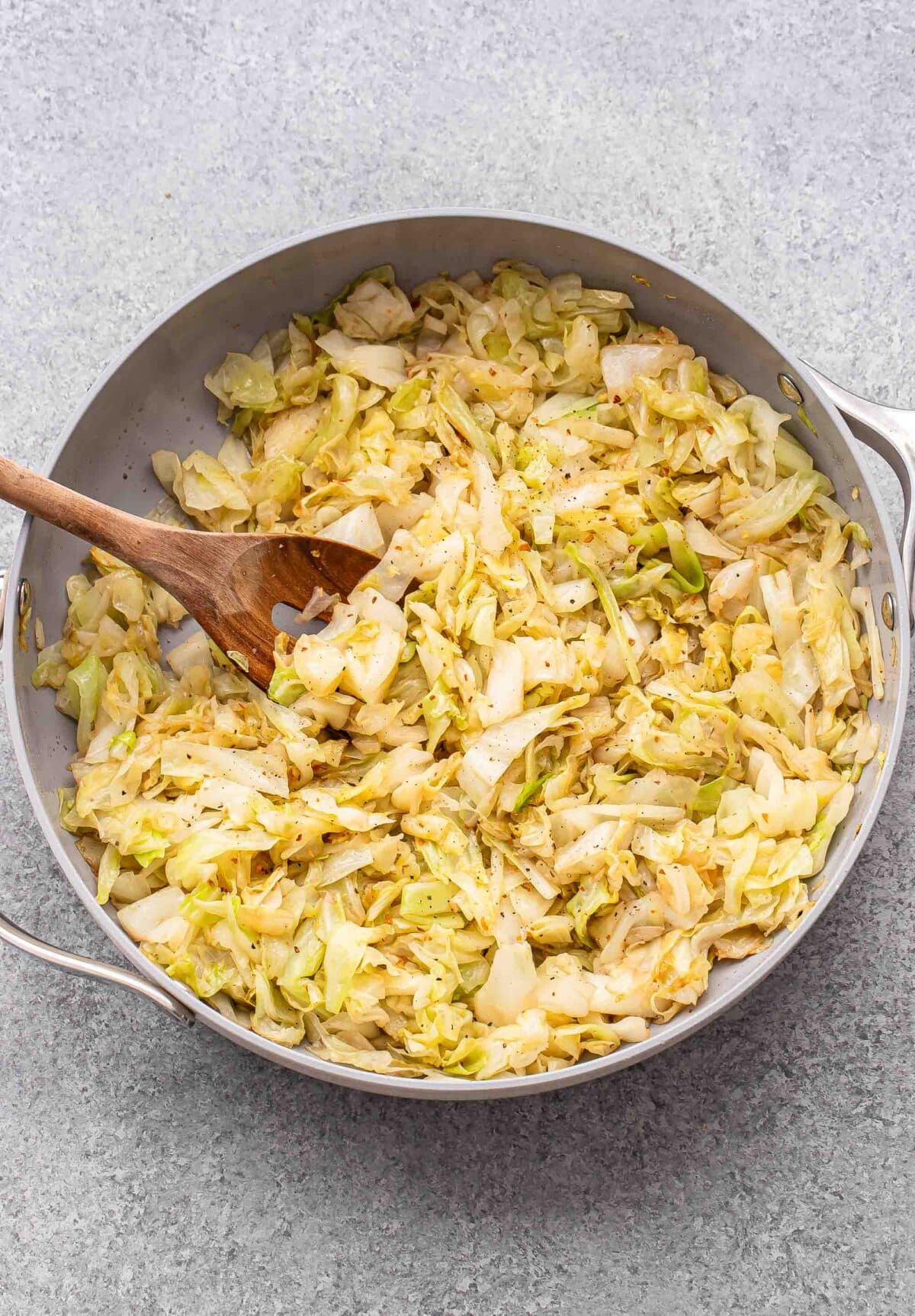
- Let the cabbage cook untouched for a couple minutes. This will allow some browning and caramelization to happen, which is free flavor.
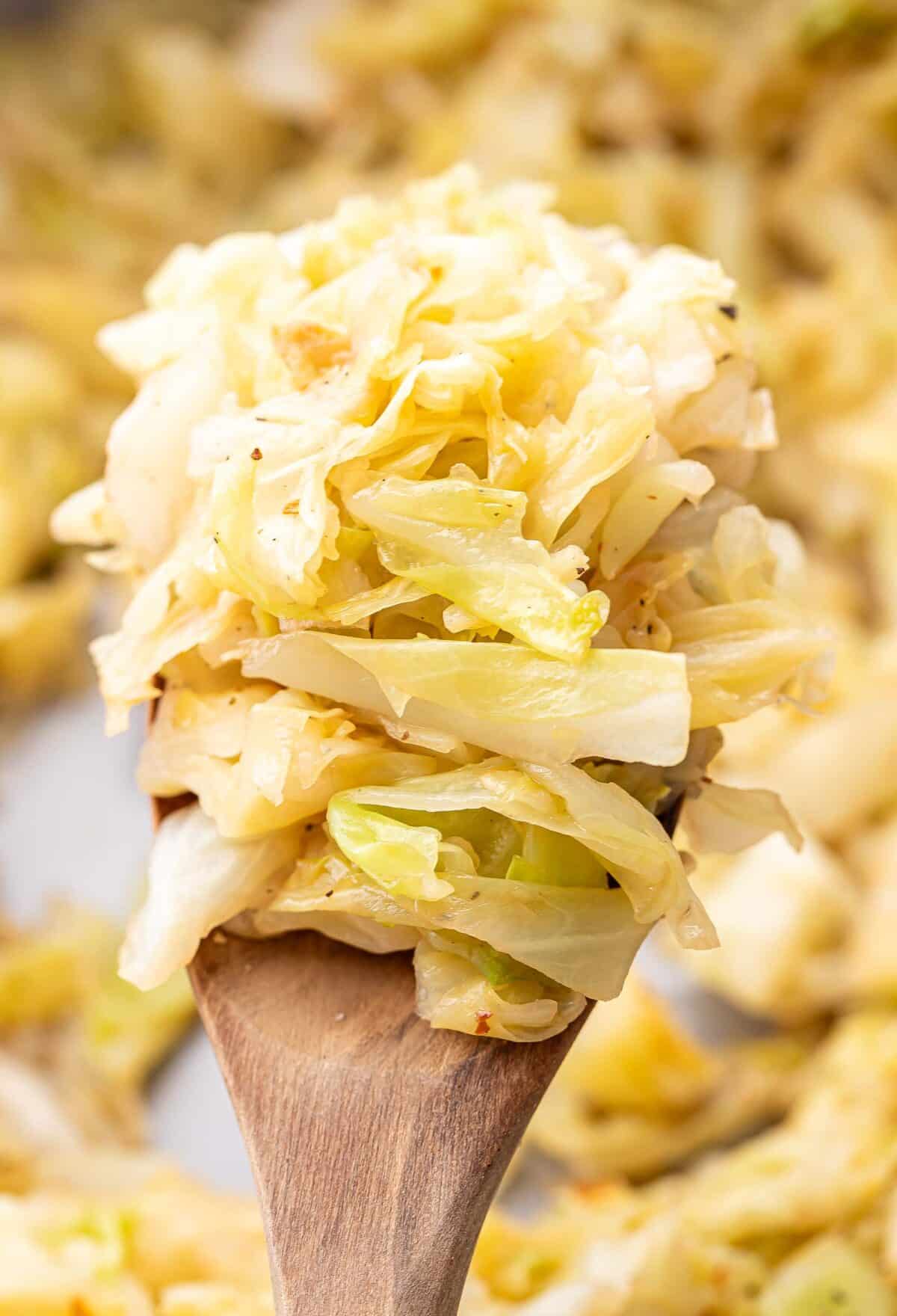
- Once the cabbage is golden brown and soft turn off the heat and stir in the balsamic vinegar. Stirring the vinegar in off the heat is important so that it retains its bright, zippy, acidic flavor.
Substitutions and Variations
This is a flexible recipe, so you can easily change the flavor profile of the cooked cabbage to meet your needs. Try adding extra ingredients or swapping them to make it heartier or to change the flavor profile.
- Sautéed cabbage and onion – Add 1 small thinly sliced onion in with the cabbage. It adds an extra layer of savory flavor.
- Sautéed cabbage and bacon – Chop the bacon into small pieces and cook it in the skillet. Remove the bacon onto a plate lined with paper towels and drain the grease leaving 2 tablespoons to cook the cabbage in. Follow the recipe as instructed and stir the bacon back in at the end. If you like this variation, you’ll love my balsamic maple roasted brussels sprouts with bacon.
- Add veggies – Try adding zucchini, carrots, red bell pepper, or corn in for an extra serving of veggies and pop of color.
- Add fresh herbs – Fresh thyme, dill, and parsley all work well with the cabbage.
- Swap vinegars – If you don’t have balsamic vinegar apple cider vinegar is a good alternative. Both vinegars have a hint of sweetness. Red wine vinegar will also work, but it will have a slightly more acidic, tart flavor.
- Asian-inspired cabbage – Use Napa cabbage, which has a milder flavor and softer texture. Use rice vinegar and tamari or soy sauce to give the sauteed cabbage a salty, umami flavor. For a spicy kick I like to add chili crisp. And to balance the salty, spicy, acidic flavors, add a drizzle of honey.
What to Serve with Sautéed Cabbage
Protein – Sautéed cabbage pairs well with just about any protein. I especially love serving it with grilled balsamic chicken, garlic parmesan chicken bites, baked lemon pepper chicken, and garlic butter steak bites.
Other side dishes – More sides that pair well with sautéed cabbage are lemon dill rice, creamy mashed potatoes, whole wheat dinner rolls, and orzo with spinach and roasted red peppers.
Other ways to serve sauteed cabbage – Sauteed cabbage is a great side dish for holiday meals such as St. Patrick’s Day, Easter, and Christmas. You can also add the leftovers to savory breakfast recipes like this sweet potato hash, or one pan meals with ground meat, like this ground beef and cabbage.
Storage and Reheating
Storage – Leftover sautéed cabbage will keep for up to 4 days in an airtight container in the fridge. I don’t recommend freezing cooked cabbage. It will be soggy and watery once defrosted. To refresh the flavor, add a splash of balsamic vinegar and a pinch of salt.
Reheating – Reheat the cabbage in a skillet on the stove over medium heat until warm or in the microwave.
Easy Sautéed Cabbage Recipe
Equipment
Ingredients
- 1 tablespoon olive oil
- 1 tablespoon butter
- 1 small green cabbage (about 6-7 cups) cored and sliced into thin strips
- 1 teaspoon kosher salt or to taste
- Freshly ground black pepper to taste
- 1/2 teaspoon garlic powder
- 1/4 teaspoon red pepper flakes (optional, but recommended)
- 1 tablespoon balsamic vinegar
Instructions
- Prep the cabbage. Remove the core, quarter it, and cut it into thin slices.
- Melt the butter and heat the olive oil in a large skillet over medium-high heat. Add in the cabbage and season it with salt, pepper, garlic powder, and red pepper flakes.
- Let the cabbage cook for a couple minutes untouched so it gets caramelized and lightly browned. Continue to saute for another 8-12 minutes depending on how tender you want it to be.
- Turn off the heat and stir in the balsamic vinegar. Taste for seasoning and add additional salt and pepper or an extra splash of vinegar if needed. Serve warm.
Notes
Nutrition
Nutrition information is automatically calculated, so should only be used as an approximation.
Frequently Asked Questions
Should cabbage be washed before cooking?
Yes. Remove any wilted or damaged outer leaves, then rinse the cabbage under cold water. Pat it dry before slicing.
Can I use red cabbage instead of green?
Yes. Red cabbage will have a more robust and earthy flavor, but can be sautéed the same way as green cabbage.



Sautéed cabbage done right — buttery, slightly caramelized, and way more delicious than it sounds.